
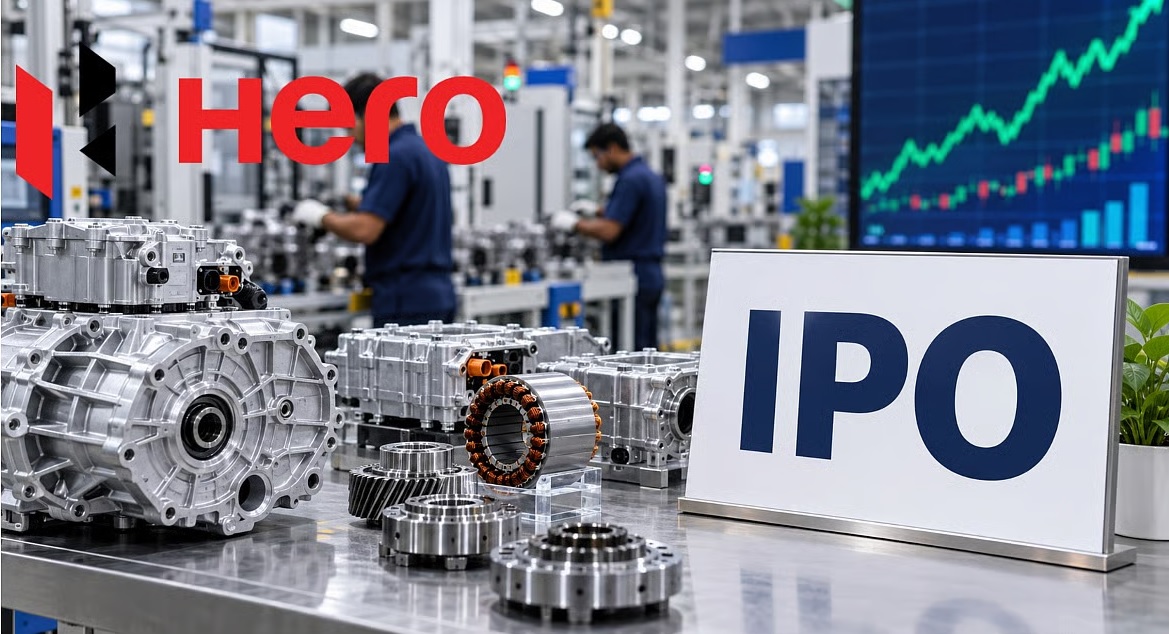
As investors continue to evaluate the recently launched Hero Motors IPO, a closer examination of the company’s underlying business segments offers valuable perspective beyond the headline figures typically associated with any IPO entering India’s primary market. Rather than focusing solely on pricing and subscription dynamics, understanding how the company actually generates revenue across its distinct operating divisions provides a more complete picture of what investors are being asked to evaluate. This article takes a closer look at the company’s segment-wise business structure and the growth strategy underpinning its public market entry.
A Two-Pronged Business Structure
The company operates through two principal business segments that, together, form the foundation of its overall revenue base. The first and more established of these two divisions centers on alloys and metallics manufacturing, a segment that traces its roots back to the company’s earliest years of operation and continues to represent a meaningful contributor to overall business performance. This division involves the production of metallic components used across various applications within the broader automotive and mobility value chain, drawing on decades of accumulated manufacturing expertise and established customer relationships.
The second and increasingly prominent segment focuses on powertrain solutions, encompassing the design, engineering, and manufacturing of both traditional internal combustion powertrain systems and newer electrified alternatives suited to a growing range of mobility applications. This segment has become the primary narrative driving investor interest in the company, given its exposure to electric bicycles, premium two-wheelers, and other emerging categories within India’s evolving mobility landscape, areas that have attracted considerable capital and consumer attention in recent years.
Understanding the relative contribution of each segment to overall revenue and profitability helps investors form a more nuanced view of the company’s risk and growth profile. A business with a meaningful base of steady, established revenue from its more traditional operations, combined with a genuinely growing newer segment, often presents a somewhat more balanced investment proposition compared to companies that are entirely dependent on unproven or rapidly evolving business lines for their overall financial performance.
Research Capabilities And Customer Relationships
A distinguishing feature of the company’s business model involves its emphasis on engineering and research capabilities, positioning itself not merely as a components manufacturer but as an integrated solutions provider capable of supporting customers across the full product development cycle, from initial design and prototyping through to final production and delivery. This kind of deeper engineering involvement often allows companies to build stickier, longer-term relationships with their customers, since the collaborative nature of the development process can create meaningful switching costs that favor continuity once a working relationship has been established.
The company has built relationships with a range of vehicle manufacturers and mobility companies across its various product categories, reflecting the breadth of its engineering capabilities and its ability to serve customers with differing technical requirements. This diversified customer base, spanning multiple mobility segments rather than concentration within a single vehicle category, can offer some degree of resilience against demand fluctuations that might affect any individual segment of the broader transportation industry at a given point in time.
At the same time, investors should recognize that operating as a components and solutions supplier to other manufacturers inherently carries certain structural characteristics worth understanding, including sensitivity to the production volumes and business decisions of customer companies, potential pricing pressure within competitive supply relationships, and the ongoing need for continued investment in research and development to maintain technical relevance as underlying mobility technologies continue to evolve rapidly.
Growth Strategy And Path Forward
Looking ahead, the company’s stated growth strategy involves a combination of organic capacity expansion and selective inorganic growth through acquisitions aimed at strengthening its technological capabilities or expanding its addressable market. The capital being raised through this public offering is intended to support both dimensions of this strategy, with a portion earmarked specifically for expanding manufacturing capacity at one of its key facilities, while another portion has been set aside to provide flexibility for pursuing acquisition opportunities that align with the company’s broader strategic direction.
This dual approach to growth, balancing internal capacity building with opportunistic external acquisitions, reflects a strategy commonly employed by companies operating in technically complex, rapidly evolving industries, where maintaining competitive relevance often requires both scaling existing operations and acquiring specialized capabilities that might be more efficiently obtained through acquisition rather than being developed entirely from scratch internally.
For investors evaluating whether to participate in or continue holding shares in this company following its public market debut, monitoring how effectively management executes on this stated growth strategy over the coming quarters and years will likely prove more informative than the initial excitement or trading activity surrounding the listing itself. Companies that successfully translate stated strategic intentions into measurable business outcomes, including sustained revenue growth, margin improvement, and successful integration of any acquired businesses, tend to reward patient shareholders over time, reinforcing the importance of looking well beyond the initial listing period when assessing the long-term investment merits of any company entering India’s public markets through this kind of offering.
